

The first venture capitalist was a woman, and her best-known deal looked like a failure for years before it produced enough wealth to turn her country into a superpower.
Christopher Columbus reached the Spanish court in the 1480s with no title nor track record. After the Ottomans took Constantinople in 1453 and began taxing the overland spice and silk trade, and Spain signed away the sea route around Africa to Portugal in their 1479 peace treaty, Spain was shut out of both paths to Asian wealth. Columbus offered a third option, sailing west to avoid both Portuguese coasts and Ottoman tolls.
A committee of astronomers and churchmen examined his figures and reported that the project was pointless and impracticable. Columbus followed the royal court from city to city, waiting for another chance to make his pitch. He was turned down in 1490, again in 1491, and once more in 1492. Then he packed his horse and rode for the French court.
One of the king’s finance officials went to Queen Isabella I of Spain and made the case that passing would cost her more than saying yes. Columbus would find a backer eventually, whether in France, Portugal, or England. The only question was whose flag his voyage would sail under.
The Queen took the deal. Everything about the project pointed to failure. It had an unproven thesis, an overconfident founder, and a committee of experts who were technically correct. But it led to the gold and silver of the Americas, and that wealth helped make Spain the most powerful country in Europe.
Five centuries later, another woman who would make her money the same way was born in the Eastern Townships of Quebec, a few miles from a paper mill.
Childhood
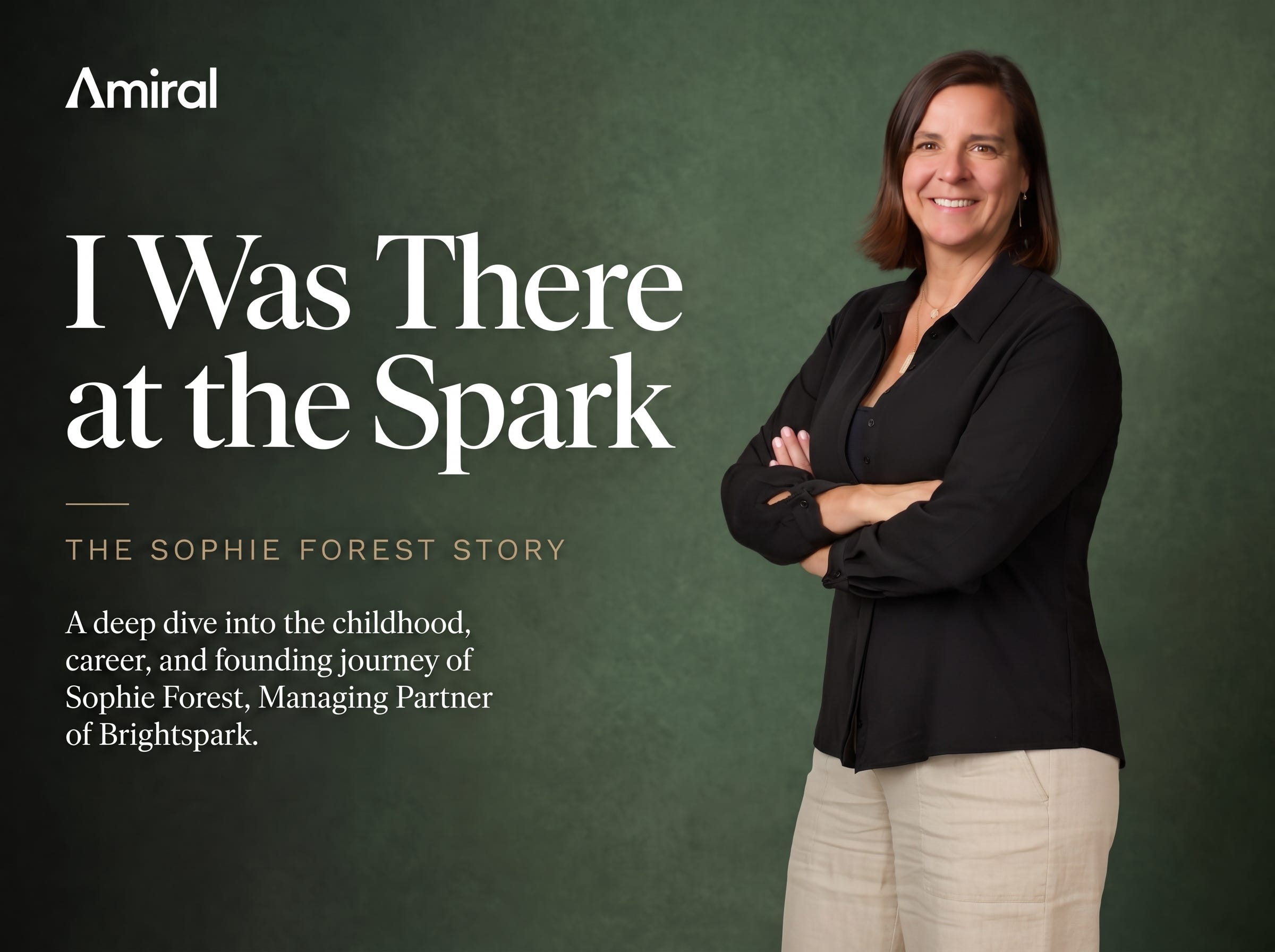
Sophie Forest was born in 1968. Her father ran human resources at the Kruger plant in Montreal, while her mother taught elementary school. Sophie was the youngest child, and she would be the only one of three daughters to go to university.
Her mother was born in 1939, one of 15 children. Her father came from a family of 9. Both grew up in the Quebec of priests and duty, where the church set the calendar and the rules for how to live. When the girls were small, the family went to mass regularly.
As Sophie grew into her teens, that loosened. Her parents stopped insisting, and she stopped going. By the time she was reading philosophy and arguing with her friends, she had decided that religion was not for her and never would be. She credits that partly to the scandals that later surfaced around the priesthood, and partly to simply thinking it through. She sees her own story as the story of Quebec. It had been as fiercely Catholic as Ireland or Italy, and then, within one generation, it moved on to agnosticism. Her parents had told their small daughters about heaven and hell, and by the time those daughters were adults they were telling them to believe whatever they liked.
From an early age, Sophie was driven by her own ambition. She was a strong student who consistently brought home good report cards, not because her parents demanded it, but because she set high expectations for herself. Her parents were supportive without being demanding, giving their daughters the freedom to pursue their own interests and ambitions. “They were not pushing me like I was pushing myself,” she recalls. The same was true of sports. Sophie played soccer for years and loved it. She remembers her parents coming to about one game a season. She would ride her bike to the field, play the match and ride home. It was the way it was back then, more freedom and more self motivation.
What her parents wanted for their daughters, she believes, was happiness. And their idea of happiness came from the time and place they had grown up in, which was a good family, a house, and a good job.
The Walkman
She took her first job at 15, waiting tables on weekends at a diner in town. It was not a fancy place. The pay was close to nothing, and the customers never stopped coming. But tips in those days ran $1 or $2 a table, so a girl who served a hundred people in a shift and hustled could come home with a lot of money in her pocket.
Her parents were always generous and supportive but in those days, allowances were not a thing. From that summer on, she paid for pretty much everything she wore and everything she did on a Saturday night. “I think my parents also wanted me to learn the value of money,” she says.
She saved every dollar that first summer. At the end of it, she went out and bought a Walkman. In the early 1980s, it was the one thing every teenager in North America wanted, a yellow plastic cassette player that clipped to the waistband of your jeans, with headphones running up to your ears. For the first time, a person could carry music with them down the street. She still remembers how it felt to own it, the pride of buying something entirely with money she had earned. “I’m the Walkman,” she says. “I’m cool.”
At 18, she took a summer job as a receptionist at a paper mill. It was a heavily unionized place. Pay was set by seniority, not by effort, and much of the culture was built around doing your work and not going beyond. The mill was also split by language. The executives were mostly anglophone, and the floor workers were mostly francophone. The woman Sophie was replacing had held the receptionist’s chair for what felt like forever. As a result, she was paid very well to answer the phone and transfer calls.
Sophie could not sit still. She arrived early and opened the switchboard as soon as she got there, instead of waiting for the clock to hit 9:00 am. She was warm with callers. When the phone was quiet, she walked around the office asking for work. She ended up with stacks of reports to check, mark and highlight.
By the time the receptionist came back from her leave, the summer student had made herself quite useful in the office. The receptionist was unsettled and set her straight. “Do you see the pile of Cosmopolitan magazines over there?” she said. “When the phone is not ringing, that is what you do. You read Cosmopolitan, and nothing else.” Sophie realized that she not was made for that kind of work environment. She never went back to highly unionized and constrained jobs.
Venture Capital
Sophie enrolled at the Université de Sherbrooke to study business administration. First-year students there all took the same general courses and picked a major at the end of the year. So she started asking her friends what they planned to choose. Their answers were all over the place, except for one point. Everyone agreed that finance was far too hard, and none of them would even consider it.
“Okay,” Sophie decided, “I’m going to do that exactly.”
In her third year she took a class in entrepreneurship, which was an unusual thing for a business school to offer in those days. She found it quite theoretical but it gave her tools she would not have found anywhere else, specifically frameworks for building a company, case studies weighing risk against reward, and diagrams mapping the stages of a young business. But her favourite class was Negotiations, an elective held on Saturdays. Most of her classmates resented it for that reason alone. But the instructor worked as a negotiator in the industry and spent the term teaching undergraduates how to negotiate contracts and close deals.
Sophie graduated in 1991, having paid her own tuition through co-op work terms.
Her first job was at Société Generale de Financement, in an aluminum trading subsidiary, where she was building complex financial analysis for trading and edging. She was good at it, and before long she had a reputation in the firm as its best analyst.
Then one of the directors came to find her. He wanted to start a private venture capital arm, and he wanted her to help him build it. “It would be entrepreneurial,” he told her. She had no idea what he was talking about. She went home and looked up what a venture capitalist actually did.
In Quebec at the start of the 1990s, venture capital barely existed. Novacap invested in private equity. The Caisse de dépôt et placement du Québec and similar institutions wrote large cheques to late-stage companies. Ventures West worked in the rest of Canada but hardly touched Quebec. An entrepreneur with an idea and no revenue had nowhere in the province to turn to. The profession that was supposed to fund those people was so rare in Canada that even finance professors did not teach it.
She saw that for herself. She had started a master’s in finance at Concordia, and she told her thesis supervisor she wanted to write about venture capital. He barely knew what it was. She eventually dropped the degree, figuring she would learn more by doing the work.
Around the same time, she was very intrigued by the birth of the Internet. This was the early version, before visual representation and search, nothing could be clicked. Just getting online took determination. She spent her evenings in text forums and chat rooms, talking with the community, amazed that a network could help people find each other and share what they knew.
“I’m a risk taker in life and I’m always willing to do something different,” she says. So she said yes to the director and helped build the venture arm.
She stayed at the firm until 1996 and rose to become its director. There was no one to teach her about early-stage investing, so everything she learned came from the deals itself.
Bell Canada
A recruiter lured her to Bell Canada to run mergers and acquisitions. The deals were bigger than anything she had handled before, and that was the point. She knew the role would push her out of her comfort zone and she took the job anyway, figuring the experience was worth the discomfort.
The experience, however, helped her realize something important about herself. While she met talented people and gained exposure to larger transactions, she quickly discovered that the pace and structure of a large corporation were not the right fit for her. She thrived in environments where initiative, efficiency, and entrepreneurial thinking could make an immediate difference.
It reminded her of her experience at the paper mill years earlier. Sophie was not someone who could sit still or feel fulfilled without being challenged. She wanted to be somewhere she could move quickly, take ownership, and see the direct impact of her work.
In 1996, Sophie became president of the Jeune Chambre de Commerce de Montréal, the junior chamber of commerce that has long been a training ground for the city’s future business and political leaders. She ran it for a year while still working full time at Bell. The chamber took all her evenings and weekends while she worked full time at her job. Yet, her boss at Bell remained delighted with her performance and mentioned that she was a top performer while she felt guilty about how little she was working.
Lucky Charm in Toronto
In 1996, the Caisse de dépôt et placement du Québec hired her as Vice-President of Investments at CDP Capital Technology Ventures, the tech arm of the biggest pool of money in the province. Her timing was remarkable. She arrived just as technology was about to shake the stock market harder than it ever had before.
The deal that defined her time there began with a flight to Toronto.
The company was Balisoft, and its founder was Mark Skapinker. In the small world of Canadian software, he was close to a legend. He had co-founded Delrina, the maker of WinFax. It grew to more than 600 people with offices in six countries, and it was listed on both the Toronto Stock Exchange and Nasdaq. In November 1995, he sold it to Symantec for more than US$400 million. Two years later, he started Balisoft. The Caisse invested, and Sophie led the round.
She thought she knew what kind of a man she would meet. Canadian tech founders in those days were almost all traditional. Meetings still meant a suit and tie, and nothing about the culture looked like Silicon Valley.
“When I first met Mark, I expected an intimidating, larger-than-life figure,” she says.
Instead, she found a visionary entrepreneur with very humble manners. He was easy to talk to, and he had no interest in showing off his track record. What he wanted to talk about was the future. Customer service, he told her, was going to move online. People would want to chat with a company and have a conversation with a computer. Balisoft was going to build the software to make that happen.
In 1997, that was a bold thing to say out loud. Online customer service did not exist as a business. The idea that someone would rather use a chat window than pick up the phone sounded like the chat rooms she was in late at night. That may be exactly why she believed him. What stood out, she says, was “his confidence and his knack for seeing opportunities before anyone else.” Balisoft was ahead of its time.
She then followed the company through every M&A transaction. In 1998, Balisoft merged with Servicesoft Technologies of Boston, and Skapinker became Chairman and CEO of the combined company. In September 2000, Broadbase Software bought Servicesoft. Then Kana purchased Broadbase. Three deals in four years, each with its own lawyers and integration plans, and she sat through all of them.
She also remembers the scenery, because of how far it was from where she had started. The boom was at its peak, and American firms had money on a scale Canada had never seen. She would fly down as the lead investor, and a limousine met her at the airport and took her to the Ritz.
Around the same time, she invested in Grocery Gateway, which delivered groceries to homes in Canada. It was a rival to Webvan, the American company that would become the most famous failure of the era. Customers loved it, but the math didn’t make sense. A customer would order $50 of groceries, and delivery was free because no one had figured out how to charge for it. Each delivery cost about $10. The profit on the groceries was about $7, so the company lost money on every order.
“That can never work ever, ever, ever,” she says now.
Brightspark
In 2000, the market crashed. Public stock indices fell by about 50%. The cause was a belief that everyone had at once, that the internet was going to change everything, and stock prices assumed it would happen soon.
“Everyone was right, but wrong on timing,” she says. People thought the shift would take 4 years, but it actually took 20.
Inside the Caisse, the crash created a problem that had nothing to do with whether any one company was good or bad. Private investments stay on the books at the price paid for them. They don’t go up or down with the stock market. So when the public investments of the portfolio fell by half, the private tech investments, unchanged on paper, suddenly made up a much bigger slice of the whole. It was far more than the Caisse’s own rules allowed. The institution was now heavily concentrated on technology without having made a single new bet. The only solution was to stop investing and start selling what could be sold.
For an employee of a big institution, there is no worse time. Sophie was no longer investing, and had to manage a pie that was getting smaller. The part of the job that draws people into the field in the first place, meeting founders who know more than the investors do and betting on them, was the one thing she was no longer allowed to do. She knew she wanted out.
Mark Skapinker, meanwhile, had moved on. He started his own venture firm in Toronto and named it Brightspark. One of his earliest backers was Sophie, still at the Caisse. It was the second time she had invested institutional money in him.
Mark called about six months into her maternity leave with her third daughter. He wanted to know when she was going back to the Caisse. She told him, in confidence, that she wasn’t. The market had taken away the job she loved and left her with one she didn’t. What she really wanted was to build a fund of her own.
He said he would call her back, and within 10 minutes, he booked plane tickets for her “Come to Toronto,” he said.
During the same leave, she had another job option. A large corporate fund, one of the few in those days with serious money, was courting her. It could offer her everything a mother of three children under 5 might reasonably want. The backing of a big institution, a large salary, and all the support that came with it. Brightspark, by contrast, was still raising money for Fund II and could offer a lot less. The corporate fund moved toward an offer, but then asked some work-life balance questions. Could she travel? Could she work at 7 pm in the evening? Could she get to Toronto on short notice, with the children at home?
Mark had less secure compensation to offer. He made his offer anyway, and then added something she hadn’t asked about. If the work ever got too hard because she had young children and needed to adjust her life as a new mother, she shouldn’t worry about it. Mark was managing his business with an inclusive culture which was extremely rare in the early 2000s. Without a doubt, she took Mark’s offer.
She calls his attitude an anomaly for its time, and it was. She also adds, clearly pleased, that he got a lot more than he bargained for. They spent the next year raising money instead of investing. In September 2004, they closed Brightspark’s Fund II, and it was the start of a partnership that has now lasted more than 25 years. Neither of them does a deal the other isn’t comfortable with, and they rarely get to the point of disagreement.
They deployed capital slowly, making just one to four deals a year, on average. Brightspark Ventures II backed 10 companies, and Sophie led 4 of them. Not every investment delivered the outcome they had hoped for. One of them was founded by someone who had already sold a graphics company, which made him the exact kind of repeat founder Sophie wanted. Brightspark led the round but despite his track record, the new venture struggled, reinforcing that past success does not guarantee future results. Another was building internet phone calls at the same time as Skype. The technology was good, but the execution was not. It was eventually sold to an Indian conglomerate so that investors could recoup their investment. The third was a supercomputing company. The technology was incredible, but the marketing was weak, and the timing was worse.
But two other names in that fund were Radian6 and Hopper. “You need those outliers,” she says. “We’ve lost money on many deals, but we’ve made money with outliers. When you lose, your worst case scenario is losing the capital, when you win, there is no limit to your best case scenario. ”
Radian6
Brightspark invested in Radian6 in 2007. At the time, there were four or five people in Fredericton, New Brunswick, among them Chris Newton, David Alston and Marcel LeBrun. Their pitch was a bet on three things. Social media was going to be huge. Brands would need to know what people were saying about them, and be able to shape it. And all of it would run on data and algorithms that could tell a company not just what was happening, but what was about to happen.
Brightspark saw how big the opportunity was. Sophie and Mark saw how smart and hungry the team was, so they invested and after a year or two, Sophie joined the board. The board met every month, and the way it ran its meetings became her personal standard from then on. The business update came first and was kept short on purpose, focusing on a high-level of the new products, growth, revenue and upcoming sales. Most of the meeting was saved for the future, for what the company should do next and what it feared most.
Every month, the board went through a list of competitors split into two columns. One was for existing players. The other was for newcomers, meaning any company that had entered Radian6’s market in the last 30 to 60 days. The newcomer column was hundreds of names. Every month or two, hundreds of new rivals were piling into a market Radian6 had helped create. Each meeting, it used the list to ask the same questions. What is our real advantage? Why are customers choosing us? How do we stay ahead?
For a while, the biggest problem was hiring. Fredericton had a good university and solid technical talent, which was part of the appeal. But Radian6 was trying to hire 20 to 30 people every month or two, and a city that size could not keep up. The board debated opening offices elsewhere and buying other companies just to get their staff.
Some meetings were about much bigger plans. Every customer relationship management (CRM) system on the market had been built before social media existed. Now customer relationships were quickly moving onto social platforms. So the board asked itself a serious question. Could Radian6 grow into the main CRM itself, instead of staying a feature inside someone else’s? Could it come at the problem from such a different angle that it ended up buying Salesforce? Sophie admits it was a bold statement, but she defends asking it. A board that never asks whether the company could be bigger, faster or bolder, is not doing its job.
Salesforce got there first. It made an offer, and the board said no, because revenue and growth were both strong and it saw how the company could win on its own. Salesforce kept on coming back with stronger offers and ultimately reached a level that made the board and the shareholders truly happy.
Then LeBrun came to her to get her opinion on the deal. Was it a good deal? She told him that compared with every tech acquisition in Canada over the past decade, this one would be at or near the top. “But are we winning?,” he asked. She told him he was completely winning. Then he asked what would happen to the employees.
In 2011, Salesforce bought Radian6 for US$326 million, about 23x what investors had put in in less than 4 years. It is still one of the most successful tech exits in Canadian history.
Sophie took two lessons from it. The first is the main rule of her profession, that the team matters more than the technology. The classic mistake is to see a strong product run by a team you have doubts about, and to talk yourself into the deal anyway. The second lesson was LeBrun’s two questions. Founders who ask whether they are winning, and what will happen to their people, before they ask what they will take home, builds far more value. For them, the company is not about themselves.
Hopper
In the same year, Brightspark put $500,000 into a Montreal company called Hopper for a 25% ownership. Its founder, Frederic Lalonde, had already sold a previous company to Expedia. When he went looking for investors, there were only a handful of firms in the country he could even approach. Most of the names now seen as pillars of Canadian venture capital did not yet exist.
The first idea had nothing to do with predicting prices. Sophie splits travel into two kinds, the practical and the inspirational. Hopper started out on the inspirational side. Suppose you wanted to go to Spain. You could give Hopper the whole problem, and it would tell you when to go, what the weather would be like, which airport to fly into, where to stay and what the flight would cost. It seems like an easy task for the OpenAI of today, but in 2007, it was a big-data company before anyone used that phrase. Or, as she puts it, “they were AI before AI.” The product needed far more information than anyone in the travel business was set up to provide.
Lalonde hopped in a meeting with Sabre, the reservation system that returns a price every time anyone, anywhere, searches for a flight. Almost none of those searches turn into bookings, and Sabre discarded the results. Hopper asked for all of it, every abandoned search in the world. Sabre could not understand the request. It added up to trillions of data points a day, and in 2007 nobody believed a startup could store that much, let alone do anything with it. Lalonde told them not to worry about what he planned to do with it. Just send it. That garbage data became the foundation of everything Hopper later became.
Building the systems took from 2007 to 2014. Hopper never did anything reckless. It never spent big before it knew customers wanted the product. The founders paid themselves small salaries. They hired so carefully that the team stayed at 15 to 20 people for years while the database was built. Lalonde had a rule of thumb that a startup should still fit in two tents on a camping trip, maybe three. A company that rents the whole campground before it has figured anything out is already in trouble. Sophie had seen the opposite many times. Companies that weren’t working would hire aggressively, thinking more people would fix the problem, but it never did. Once Hopper knew what it had, it grew without holding back.
Then, Airbnb came calling. Lalonde told Sophie he was flying to San Francisco, that four senior Airbnb executives were clearing a weekend to spend with him so the two sides could get to know each other. He expected an offer at the end and asked her what the price should be. Sophie said $500 million sounded good. He agreed. Together they planned the dance, where he would open at $700 million, and they would settle somewhere around $500 million.
He flew out on Friday, and she heard nothing for three days.
On Monday he called. “It was amazing,” he told her. The Airbnb executives were brilliant, the cultures matched, and they had a vision for connecting flights to the accommodations their users were already booking that fit neatly with everything Hopper was building. Then he said he had bad news. At the end of the weekend, they finally asked what the company was worth. He had spent 48 hours pitching Hopper, and it had all sounded so good coming out of his team’s mouth that he told them $2 billion. He asked her if she was mad. She said no and asked if he wanted to keep building. He said he did. That was the end of the conversation, and the end of the deal.
For Brightspark, a $500 million sale would have been an extraordinary return on half a million dollars. For Lalonde, it would have meant life-changing wealth for his family for generations. But, he walked away from it.
Sophie’s view of that choice is the closest she comes to a big picture belief about her own country. Canada’s problem, she thinks, is not founders who ask for too much. It’s the founders who take the $200 million when it is offered, because the money is like a golden chain and the other option is another decade of risk.
“That’s what we want,” she says. “We want to build those companies.”
She has sat on Hopper’s board since 2007. Brightspark did sell half of its position in Hopper in 2020 for a 100x return. Believing in very ambitious founders does not mean a Fund like Brightspark should forget that their LPs are expecting returns and money back.
SPV Fund
Around 2010, Brightspark ran into a problem that had nothing to do with its investments. Canada’s startup scene was weak. There were few experienced founders, even fewer who had done it more than once, and almost no other firms to share deals with. Brightspark was working nearly alone, and it was deeply involved in every company because there was no one else to be. The shortage wasn’t money, and it wasn’t belief. There just weren’t enough people starting enough companies.
So Brightspark decided to make its own. That seems like a strange thing for a venture firm to do, but drinking your own cool-aid and being entrepreneurial yourself is also part of Brightspark journey and culture. The partners put their own capital with a few friends in a small fund, around $2 million, and used it to start companies themselves. Launching a software company had become cheap enough by 2010 to make that possible, and they built five. They hired people to run them and connected them with the best lawyers, marketers and engineers they could find.
All the capital invested across the five returned more than $30 million. Some failed and some did very well. Brightspark did have a curated list of wealthy individuals who wanted to invest with them so they started doing deals one at a time. They would find a company, put in the partners’ own money, and raise the rest of the round from wealthy individual investors. Each deal got its own separate pool of money, and nobody else in Canada was doing it.
Sophie talked about this as a way to open the door to more investors, diversifying the pool of investors while filling a void for access to quality venture capital deals. By then, almost all the value in tech was being created before companies went public. The ones that did go public, like Uber and Airbnb, waited so long that most of the growth had already gone to private investors. An ordinary person could buy Apple stock, but couldn’t touch the part of the market where the change was happening. Sharing information had gotten easier, and the legal paperwork had gotten simpler, so opening that market up was finally possible.
She was careful to separate Brightspark from the online platforms doing something similar. AngelList and OurCrowd had grown out of individual angel investors and angel groups. Brightspark came from the other direction. It had been a venture firm for two decades, which gave full research on every deal, and investing alongside other venture and private equity firms. Her phrase for it was “VC grade” or democratizing the VC space.
They raised about $100 million and built a network of wealthy Canadians along the way. The relationship was stronger than any they’d had with institutions. Then the LPs that had backed their funds came back eager to invest in Brightspark’s traditional fund again. The partners were hesitant, as they had grown their SPV business to a nice size. But they understood that institutional money brings size, staying power and credibility, and the Canadian market had grown big enough to deserve both. They closed a fund in 2020 and another in 2023, about $160 million in total for early-stage Canadian companies. The deal-by-deal pools kept running alongside them.
Now the two work together. Brightspark leads with the fund, putting $2 million to $4 million into a company at the start. The deal-by-deal money then comes in on top. Instead of rounding up three other firms to fill a round, Brightspark can cover a larger portion on its own, with money raised from individuals one deal at a time.
By then, she had led or overseen hundreds of investments in Canadian tech companies. In October 2017, the National Angel Capital Organization named her Angel of the Year and in 2024, she was named trailblazer by the CVCA association.
A Different Leader
Sophie has spent 35 years building her career in venture capital, an industry where women have historically been underrepresented, and more particularly in leadership roles.
Venture capital means taking big risks and working with founders who have personalities and bold ambitions. The industry has long believed that the job takes a type A personality, and type A has long been seen as male. Doing the job well also makes a lot of money, and big personal wealth has long been seen as male too.
Type A + money = male-dominated.
The strengths women more often bring aren’t valued by the people already in the room. She describes the typical venture capitalist she meets as loud and usually arrogant, and empathy and the ability to listen, which she considers real advantages, get filed under soft skills. Those are the qualities her own reputation with founders rests on, and the first thing people mention when they write about her.
Then there is the social life, the drinking and the race cars and the cigars. They are built around one kind of male leisure, and they function as a filter whether or not anyone intended one.
Then there is the hardest part of all, which is children. A woman who steps away for a year can lose much of what she spent a decade building. The time away counts against her, and so does being less available afterward. In a business where relationships and access to deals are everything, those losses pile up fast.
So when Brightspark named a young woman, Éléonore Jarry, a full partner, Sophie walked into talks for the next fund with a specific demand. Venture funds include what’s called a key-person clause. It penalizes the firm if certain named partners leave, because investors put in money based on trust in specific people. Sophie thinks that’s completely normal. She just wanted one sentence added, “Parental leave does not apply.”
The lawyers for the big institutional investors were alarmed. They started listing what-ifs right away. What if the leave is 18 months instead of 12? What if it’s two children in two years? Every time, Sophie’s answer was the same, “Yes, that’s the point.”
Her argument was never really about Jarry, who wasn’t starting a family at the time and whom Brightspark planned to support no matter what. It was about every other firm in the country with a talented young woman one step away from partner. Those firms would follow suit. They would worry that a year or more of leave might trigger the clause, and they would quietly decide not to promote her.
She pushed for a month, and then one of her LPs called her directly. “Sophie, just let it go. You’re not going to close your fund if you don’t let it go.” She did end up letting it go, and the fund closed. But her conviction remained unchanged. The whole value of adding such a clause into a legal document is that the next firm finds it already there and never has to fight for it.
Inside her own firm, she acts as if the clause exists. Most of the team is in their 30s and having babies. At one point, two people were on leave at the same time, one of them a man. Sophie told everyone they would each do 10% more while their colleagues were away. “That’s what support looks like,” she said, “and one day it will be their turn.”
Underneath all of this, the numbers have shifted. 20 years ago, she might meet a hundred companies and find one led by a woman. By the end of the 2010s, a quarter of Brightspark’s portfolio companies were led by women. Her own firm has been half women at the top for 15 years. She sees that as her clearest proof that different perspectives lead to better decisions, in an industry where most Canadian firms are still white, male and alike. But she adds a point that matters to her. The advantage may not be about gender so much as about having someone at the table who comes at problems from a different direction.
She is the mother of three daughters, all involved in technology and entrepreneurship. Being able to show your daughters that it’s feasible, as a woman, to have a family and lead, has always been key for Sophie and her spouse. Sophie noted that having a family as a female leader is hard and you do need support along the way.
She was very lucky to meet her partner Mark who completely supported diversity before it was even a thing but most importantly, she was blessed with her life partner, Ray, for 37 years, who has been her biggest supporter, her cheerleader. Ray’s view on Sophie’s career has been that all those successful men in the VC and tech world accomplished a lot but the doors were wide open for them.
Sophie had to fight all the way, yet created with the same success. Not every woman is lucky enough to have this kind of support. Behind every great woman stands a great man?
Great choice of the feature of this issue!